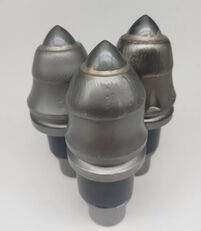
Trépan Hard Rock Rotary Drilling Teeth Piling Drill Rig Tools neuf




Si vous décidez d'acheter un véhicule ou du matériel à bas prix, assurez-vous que vous communiquez avec un vendeur réel. Cherchez autant d'informations sur le propriétaire que possible. Un escroc peut se faire passer pour une société réelle. En cas de doute, contactez-nous en utilisant le formulaire de commentaires afin que nous effectuions un contrôle supplémentaire.
Avant d'effectuer un achat, étudiez attentivement plusieurs offres de vente afin de connaître le coût moyen du modèle de véhicule ou d'équipement que vous avez choisi. Si le prix de l'offre qui vous intéresse est très inférieur aux offres similaires, réfléchissez bien. Une différence de prix considérable peut indiquer la présence de défauts cachés ou une tentative d'escroquerie.
N'achetez pas de produits dont le prix est trop différent du prix moyen de produits similaires.
Ne consentez pas à payer une caution ou une avance douteuse. En cas de doute, n’hésitez pas à demander des précisions, des photos et des documents supplémentaires, vérifier l'authenticité des documents ou encore poser des questions.
C'est l'arnaque la plus répandue. Des vendeurs malhonnêtes peuvent demander une avance sur le montant total pour « réserver » votre achat. De cette manière, ils peuvent recueillir un montant considérable, puis disparaître.
- Faire un prépaiement sur la carte
- N'effectuez pas de prépaiement sans établir de documents confirmant le transfert d'argent si le vendeur vous semble suspect au cours de vos échanges.
- Transfert de l'argent sur le compte séquestre
- Méfiez-vous de ce genre de demandes, il est très probable que vous soyez en train de communiquer avec un fraudeur.
- Virement sur le compte d'une société avec un nom similaire
- Soyez vigilant(e), des fraudeurs peuvent se faire passer pour des entreprises connues en introduisant des modifications mineures dans le nom. Ne transférez pas d'argent en cas de doute sur le nom de l'entreprise.
- Substitution de ses propres coordonnées dans la facture d'une entreprise réelle
- Avant d'effectuer le virement, vérifiez que les coordonnées indiquées sont exactes et qu'elles appartiennent à l'entreprise indiquée.
Coordonnées du vendeur



 Chine
Chine


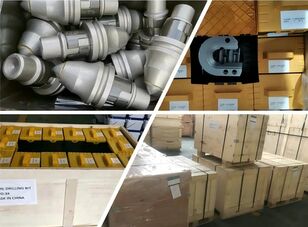
Carbide auger teeth, also known as cutting picks, bullet teeth, or drill bits, are essential cutting components used in drilling, excavation, mining, tunneling, and foundation engineering applications.
Structure and Key Components
A typical carbide auger tooth consists of a cone-shaped working part, a cylindrical mandrel (the gripping part), and a cutting edge made of cemented carbide. The main components include:
Tungsten Carbide Tip: Provides exceptional hardness and wear resistance for extended cutting performance in abrasive conditions.
Alloy Steel Body: Heat-treated for high toughness and impact resistance, designed to absorb shocks and prevent premature failure.
Wear Protection: Some models feature additional wear-resistant layers or hardfacing, such as tungsten carbide overlay, to extend service life in tough applications.
Clamping and Retention System: Designed for secure fitting into the toolholder, with some models using a spring clip or locking mechanism to prevent loss during operation.
Materials and Manufacturing
The tooth body is typically made of 42CrMo alloy steel, while the tip is made of cemented carbide (tungsten carbide with cobalt binder). The material hardness ranges from 1300 to 1600 HV30 for the carbide tip, and the steel body is heat-treated to a hardness of HRC 40-50. Advanced manufacturing processes include warm extrusion forging, precision heat treatment, and vacuum brazing for secure bonding between the carbide tip and steel body.
Types and Applications
Carbide auger teeth are available in multiple series designed for different ground conditions and rock strengths:
Classic Series: For soft rock formations, typically below 20 MPa rock strength.
Cemented Carbide Strip Series: For strongly weathered sandstone and mudstone.
Cemented Carbide Button Series: For strongly weathered sandstone and mudstone.
Plasma Welding Ripple Series: For medium hard rock and hard rock.
Lengthened Series: For silt formations.
Large Body Series: For cobblestone and gravel layers.
Upgraded Series: For hard rock such as granite and basalt.
Common Shank Sizes and Models
Bullet teeth are available in a wide range of shank diameters to match different toolholders and drilling equipment:
0.44 inch (11 mm) shank: CM42
0.55 inch (14 mm) shank: CM61
0.76 inch (19 mm) shank: C21 series, RL series, RS series
0.78 inch (20 mm) shank: RP series, BSK series
0.86 inch (22 mm) shank: SM series, SL series, SD series
1 inch (25 mm) shank: C31, C32, U40HD, BTK series
Stepped shank (TS): TS8, TS11, TS19, TS32, TS31, TS5
Industry Applications
Carbide auger teeth are widely used in the following applications:
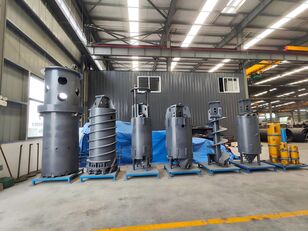
Foundation drilling and piling rigs for deep foundation work (bridges, high-rise buildings, wind turbines)
Mining and tunneling: Installed on continuous miners, roadheaders, and tunnel boring machines for cutting through hard rock, coal, and ore
Trenching: Mounted on trenchers for cutting trenches in soil, clay, and asphalt
Road milling: Found on road milling machines for removing asphalt or concrete pavements
Geological exploration and water well drilling
Customization
Manufacturers support custom development and production of carbide auger teeth for special applications, including non-standard sizes for specific equipment, extreme ground conditions such as ultra-abrasive or ultra-hard rock, and personalized process upgrades such as custom hardfacing or carbide grades.